
Beneath the Surface: Building a Winning Strategy Against Nematodes
Plant-parasitic nematodes are a leading cause of turfgrass decline on golf course greens and can be difficult to diagnose because symptoms often resemble drought stress, nutrient deficiencies, heat stress, or root diseases.
Key takeaways include:
- Nematodes damage turfgrass roots and reduce water and nutrient uptake.
- Yellowing, thinning, and weakened turf are common symptoms, but laboratory testing is required for accurate diagnosis.
- Nematodes frequently occur alongside root diseases such as Pythium root rot, summer patch, and take-all root rot, increasing overall turf stress.
- Species-specific behavior influences the best timing for nematicide applications.
- Strong cultural practices that promote root growth are the foundation of nematode management.
- Resilia® root health solution and Indemnify® nematicide provide proven tools for nematode and root disease management when incorporated into a comprehensive root health program.
- Rotating chemistries and integrating cultural, diagnostic, and preventive practices helps maintain healthy putting greens and reduce long-term turf decline.
This article provides guidance on nematode identification, testing, treatment timing and integrated root health management for golf course superintendents.
Plant-parasitic nematodes have been challenging golf course superintendents for decades, often without being detected. These microscopic pests attack turfgrass roots and contribute to declining playing conditions, yet their symptoms frequently resemble those caused by heat stress, drought, traffic, nutrient deficiencies and/or soilborne diseases. Diagnosing nematode damage is further complicated by the variability of symptoms, even within the same course. As a result, nematodes often go unnoticed while golf course superintendents pursue other explanations for turf decline. This is especially true in cool-season regions where nematodes have become problematic over the last 10 years or so.
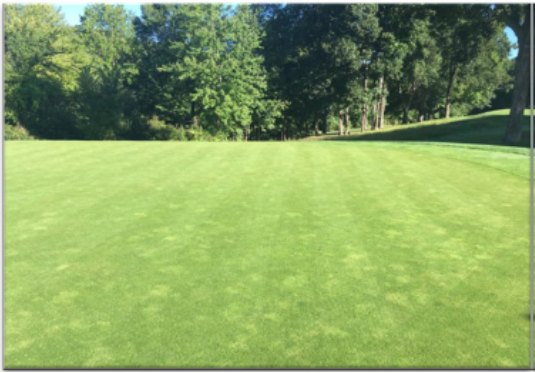
Figure 1. Yellowing is one of the more common symptoms caused by nematodes in cool-season greens. These yellow spots can coalesce and decline quickly during stressful periods, causing large, thinned areas (Envu) |
Turf affected by nematodes often appears yellow, thin, or weak and may fail to respond to irrigation or fertility adjustments. Turf decline is often most severe during periods of low growth potential, such as late summer in the Midwest and Northeast or winter in the Pacific Northwest, while the Southeast experiences symptoms throughout the year with shoulder seasons being most damaging. Additional stresses, including aggressive cultivation, topdressing, or tournament conditioning, can accelerate visible damage.
Adding to the complexity, nematodes rarely work alone. Research and field experience consistently show that nematode injury is almost always compounded by root diseases such as Pythium root rot, summer patch, or take-all root rot. Together, these pests and pathogens can significantly reduce root mass, limit water and nutrient uptake, and weaken the turfgrass plant’s ability to withstand environmental stress. In most cases, the interaction between nematodes and root pathogens produces greater damage than either would cause independently. Research over the last decade has significantly improved our understanding of nematode behavior in both cool- and warm-season turf. For example, root-knot nematodes remain concentrated near the soil surface and can be targeted during much of the growing season. Sting nematodes are migratory and move deeper into the soil during warmer periods, making spring and fall the most effective treatment windows. Lance nematodes are particularly difficult to manage because they are migratory, both within root tissue where they are partially protected from nematicides, and in the soil. Understanding these species-specific behaviors can help golf course superintendents better time applications and improve control. Because symptoms alone cannot confirm a nematode problem, routine sampling and laboratory testing remain critical. Samples should be collected from the edges of symptomatic areas where active feeding is most likely occurring. However, interpreting results requires caution. Nematode populations can vary tremendously within a green, and healthy turf may sometimes contain higher populations simply because larger root systems support more feeding activity. For that reason, laboratory thresholds should be viewed as guidelines rather than absolutes, and turf response following treatment often provides valuable confirmation of nematode involvement.
Successful nematode management begins with strong cultural practices aimed at maximizing root growth. Maintaining appropriate mowing heights, optimizing fertility and irrigation programs, improving sunlight penetration and increasing air movement all help strengthen turfgrass roots before stressful periods. Managing roots is a season-long battle of attrition, and healthy, vigorous root systems are better equipped to tolerate the combined pressures of nematodes, diseases and environmental stress.
Application programs should be designed to complement these cultural practices while addressing the complex interaction among nematodes and root pathogens. Resilia® root health solution was developed specifically to combat major soilborne pathogens. This product contains prothioconazole (a non-growth regulating DMI that controls fairy ring and patch diseases), alongside fluopyram (an SDHI to combat plant-parasitic nematodes), and the pythium specialist, propamocarb HCl. Though Resilia is highly effective with all parasitic nematodes, this product is particularly useful when root-knot nematodes are of concern as four monthly applications maintain a lethal dose of fluopyram within the profile occupied by the nematode.
When laboratory testing confirms nematodes are the primary cause of significant turf decline, golf course superintendents should immediately apply Indemnify nematicide (fluopyram). In severe infestations, Indemnify may be applied up to 4 times per year to an area of 10,000 ft2 per acre of golf course turf. Backed by more than a decade of field performance, Indemnify provides broad-spectrum control across a wide range of plant-parasitic nematode species and has earned an industry leading reputation for both efficacy and turf safety.
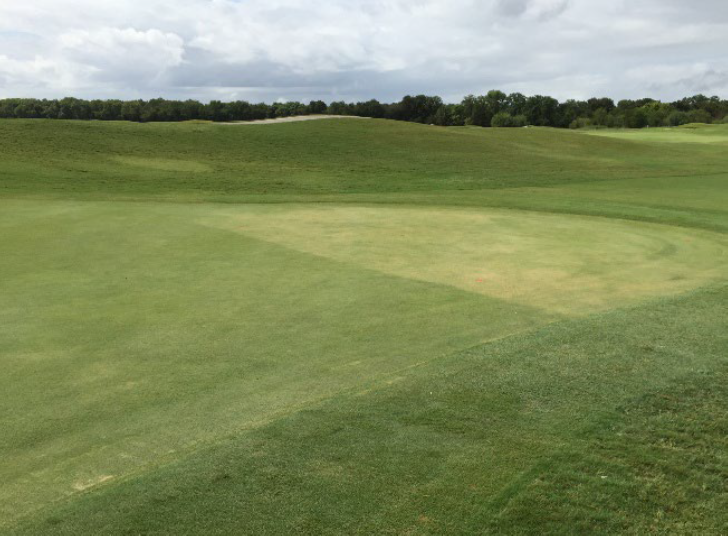 Figure 2. Treating a portion of an affected area with Indemnify (left) and leaving areas untreated (right) can help confirm whether your turf will benefit from a nematicide program before employing a broader-scale treatment (Envu). |
As with any pesticide program, rotation is essential. A tank mixture of Fame® (fluoxastrobin) and Serata® (picarbutrazox) fungicides serves as the perfect rotational partner to Resilia root health solution. Serata has become the industry leader for control of Pythium root diseases, while Fame is highly effective against fungal root and foliar diseases. Rotating Resilia with Fame plus Serata provides season-long protection against all major root pathogens in turfgrass. Where nematodes are a significant concern, products containing abamectin should also be incorporated as rotational tools to tamp down resistance concerns. Additionally, rotating foliar applications of Signature™ XTRA Stressgard® plus Daconil will control most foliar diseases, plus provide improved photosynthesis for the healthiest putting green turf.
For questions about nematode identification, sampling, treatment timing, or developing a customized root health program for your course, connect with the Envu Green Solutions Team.