
How Will the Forecasted El Niño Affect Golf Course Turfgrass?
September 2026 Update
As golf course superintendents look ahead to fall and winter, one question is becoming increasingly important: How will the forecasted El Niño impact turfgrass health and disease pressure?
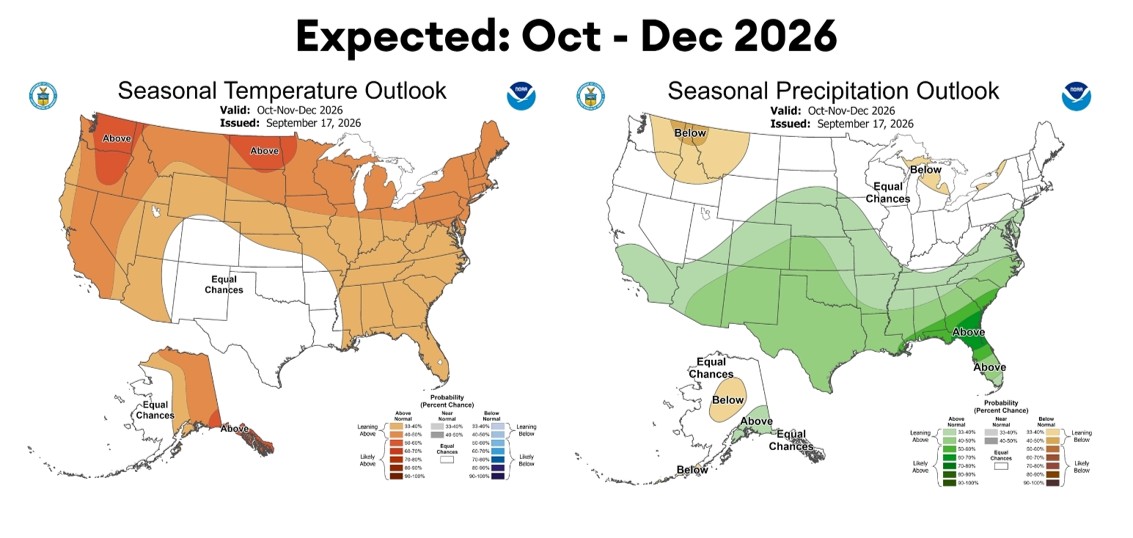
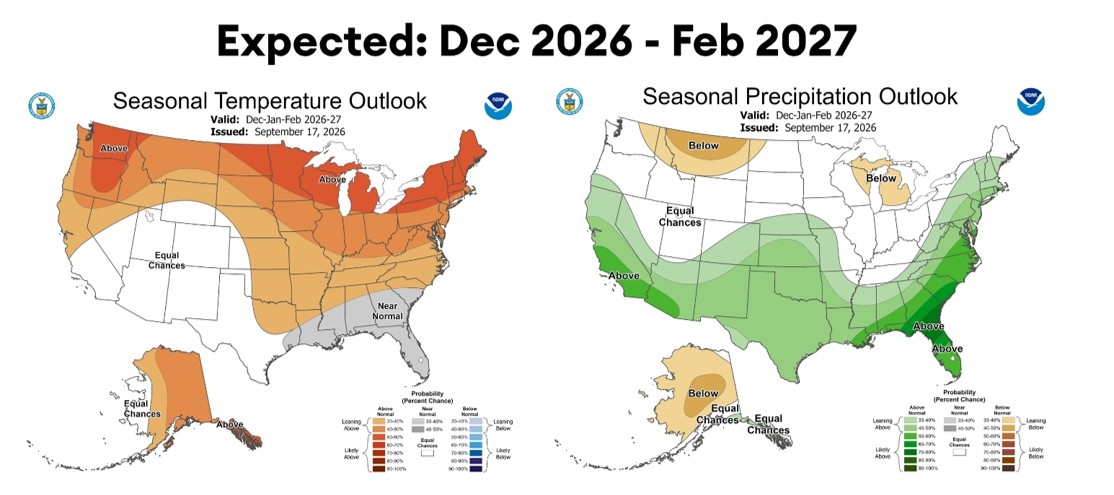
According to forecasts cited by the National Oceanic and Atmospheric Administration (NOAA), the developing El Niño is expected to strengthen and influence weather patterns well beyond the Southeast U.S.. Warmer temperatures, increased cloud cover and above-average rainfall are expected across many regions, creating environmental conditions that can favor both foliar and root diseases.
For turf managers, the biggest concern is not simply more rainfall. It's what extra rainfall with marginal drying weather can mean for overall turf health.
Source: National Weather Service Climate Prediction Center
What Does El Niño Mean for Golf Courses?
As of September 2026, NOAA's Climate Prediction Center continues to forecast a strengthening El Niño that is expected to persist through the fall and winter of 2026-27, with forecasters indicating a greater than 90% probability of a very strong event. NOAA's outlook also suggests a significant likelihood that this El Niño could rank among the strongest on record, increasing the potential for meaningful shifts in temperature and precipitation patterns across the U.S.
For golf course superintendents, the forecast is noteworthy because strong El Niño events are often associated with wetter-than-normal conditions, increased cloud cover and warmer temperatures in several regions of the country. These environmental conditions can create favorable conditions for both foliar and soilborne diseases, making proactive planning for disease management and root protection programs especially important as courses move into the fall and winter seasons.
Which Regions Could See the Greatest Impact?
Current forecasts suggest the most significant effects may extend across multiple regions:
- Atlantic and Gulf Coast states from Virginia to Texas are expected to experience increased rainfall and warmer temperatures.
- Arizona and southern California could receive significantly more precipitation during fall and winter than normal.
- Northern California and the Pacific Northwest are expected to see warmer conditions, which may further elevate disease pressure in areas already prone to winter turf challenges.
While weather impacts will vary locally, superintendents in these regions should consider how prolonged moisture may influence disease management programs.
Source: National Weather Service Climate Prediction Center
What Turfgrass Diseases Could Increase During El Niño?
With wetter conditions forecasted, several diseases may become more active. Foliar diseases such as Pythium blight, Bipolaris leaf spot and Microdochium patch may benefit from prolonged leaf wetness and increased humidity.
At the same time, root systems may face greater pressure from Pythium root rot (PRR), take-all root rot (TARR) and plant-parasitic nematodes. These issues can be especially damaging because root decline often develops before visible turf symptoms become widespread.
What Should Golf Course Superintendents Do Now to Prepare for an El Niño?
The best strategy is to prepare before disease pressure intensifies.
As summer transitions to fall, evaluate areas with a history of drainage challenges, root disease activity or winter performance issues. Strengthening preventative disease management and root protection programs now can help reduce the risk of turf loss during prolonged wet weather periods.
This is also an ideal time to assess upcoming aerification, overseeding and grow-in schedules, as these activities may coincide with environmental conditions that favor disease development.
How Should Golf Course Superintendents Adjust Disease Management Programs During El Niño?
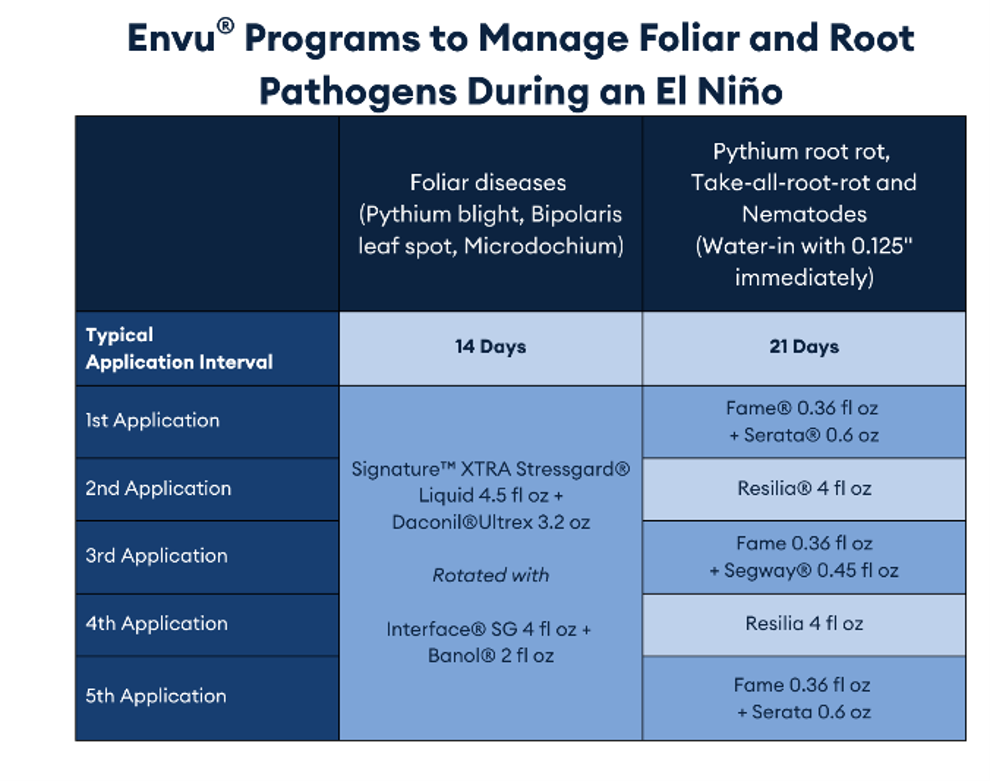
With wetter conditions and elevated disease pressure expected during an El Niño, superintendents may want to strengthen both foliar and root disease programs. For foliar diseases such as Pythium blight, Bipolaris leaf spot and Microdochium patch, a 7 to 14-day rotation program can help maintain consistent protection. One approach is to alternate applications of Signature™ XTRA Stressgard® Liquid + Daconil® ULTREX® with Interface® Stressgard® + Banol® throughout periods of elevated disease pressure.
Root disease management require a different strategy. For threats such as PRR, TARR and nematodes, Envu recommends a 21-day interval program at a minimum during high pressure periods. This program includes a rotation of a variety of tank mixes with Fame®, Serata®, Resilia®, or Indemnify® and Segway® (see table below). Though it’s counterintuitive during wet weather, applications should be watered in immediately with approximately 0.125 inches of irrigation to move active ingredients into the root zone.
Combining foliar and root protection strategies can help golf course superintendents proactively manage the increased moisture, prolonged leaf wetness and heightened disease pressure often associated with strong El Niño weather patterns. By implementing preventative programs before conditions deteriorate, courses may be better positioned to maintain turf quality, root health and consistent playing conditions throughout the fall and winter months.
Key Takeaway
Golf course superintendents should view the forecasted El Niño as a signal to proactively manage disease risk and root health. While the exact impact will vary by region, warmer temperatures and increased rainfall could create favorable conditions for both foliar and soilborne pathogens. Taking a preventative approach now can help protect turf quality, improve resilience and support more consistent playing conditions throughout the fall and winter seasons.