
The Problem
The bermudagrass mite, or bermudagrass stunt mite (Eriophyes cynodoniensis) was discovered for the first time infesting bermudagrass lawns in Arizona in 1959. It has since been reported in California, Nevada, New Mexico, Oklahoma, Texas, Alabama, Georgia, South Carolina, North Carolina, Florida and Hawaii. Though mites are under-recognized and often misdiagnosed, they have become a prominent pest of bermudagrass turf.
What To Look For
Bermudagrass mites are among the smallest arthropods (1/125-inch or 0.2 mm) that feed on turf (Fig. 1) and they spend their entire life cycle between the leaf sheath and stem. This makes them difficult to identify, even with the use of a magnifying lens. Feeding consists of piercing epidermal cells and sucking plant fluids, causing stunted, chlorotic leaf tips (Fig. 2). Continued feeding creates a distinct growth form known as a “witches broom” from stems with few or no internodes (Fig. 3).
Bermudagrass mites are active in warm weather and damage is most often seen in springtime. In warmer climates of southern Florida and Texas, bermudagrass mites may be active throughout the year, with turf damage more evident in spring and fall (Fig. 4). Bermudagrass mites weaken turf, making it more susceptible to other stressors such as traffic and drought. In areas with high pressure from other pests, bermudagrass mites can further weaken and thin turf enhancing susceptibility to weed invasion.
The Solution
Aggressive low mowing, or fraise mowing can be implemented, along with collecting and destroying clippings has been shown to help reduce bermudagrass mite damage. However, these are usually impractical because they are costly and cause unsightly playing conditions. Reducing traffic and applying adequate irrigation and fertility can reduce additional stress and help improve recovery from damage. Chemical suppression of bermudagrass mites has been difficult for many years, with these mites protected from contact products within the leaf sheath. Kontos® (spirotetramat) is a miticide that is registered1 in three states for a special local need for controlling bermudagrass mites, following years of research that have shown excellent efficacy compared to current industry standards. Kontos is a true systemic that translocates in both xylem and phloem, as well as translaminar from upper to undersides of leaves.
Bermudagrass Mite Solutions
| Solution | Rate | Annual Max Rate |
Application notes |
| Kontos® | 5 fl. oz/A | 25 fl. oz/A | Apply when pests first appear or when damage is first noticed. Historically affected areas should be treated when bermudagrass leaf growth begins. Sequential applications 14-28 days later may be needed in high pressure areas |
| Triple Crown® | 25 fl. oz/A | 50 fl. oz/A | Not recommended as a stand-alone product but instead as a part of programmed approach. For best results, apply mite insecticides with a surfactant and in a water volume of 2 gal/1,000 ft2. Restricted use product on golf courses |
Timing
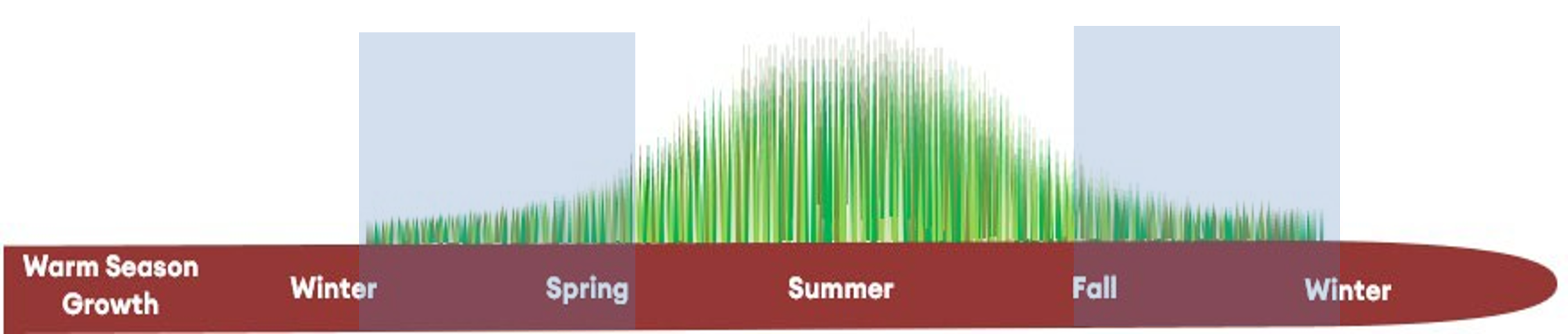
Timing is critical to maximize control of bermudagrass mites. Shoulder seasons often are most impacted due to the slow growth of bermudagrass. Spring applications should begin when bermudagrass resumes growth with 2-3 sequential application 14-28 days later in high pressure situations. In more southern regions, sequential applications in early Fall prior to slowed growth and semi-dormancy have proven most efficacious.
Chemical applications made to existing damage will not repair damage but will reduce the mite population and future damage symptoms. The inclusion of Triple Crown® 28 days after Kontos applications in Spring and 28 days before Kontos applications in Fall offers increased control of mites as well as other insect pests.
 |
||||||||
| Kontos (5 fl oz/A) followed by Kontos (5 fl oz/A) | Triple Crown (25 fl oz/A) 28 days after last Kontos app | Triple Crown (25 fl oz/A) | Kontos (5 fl oz/A) followed by Kontos (5 fl oz/A) | |||||
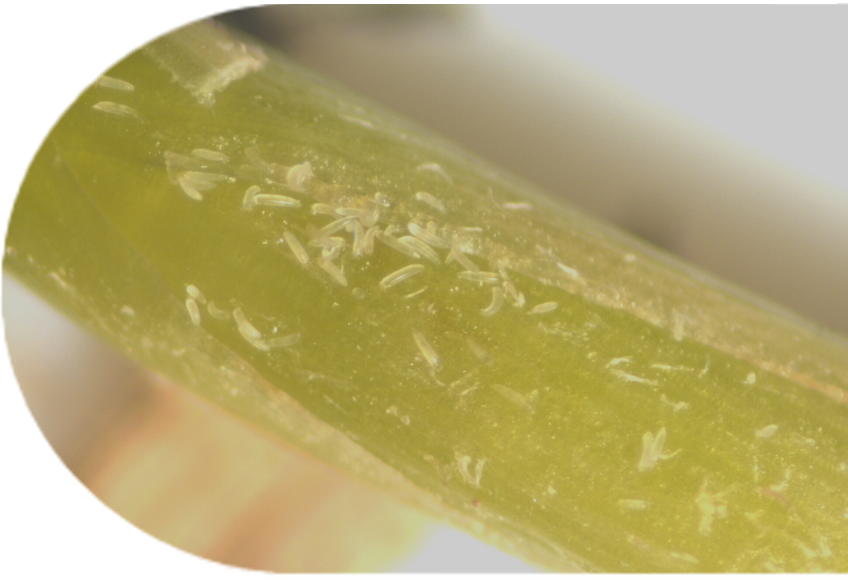
Figure 1. Bermudagrass mites are tiny and complete their entire lifecycle between leaf sheaths and stems (photo courtesy Matt Brown, Clemson Univ). |
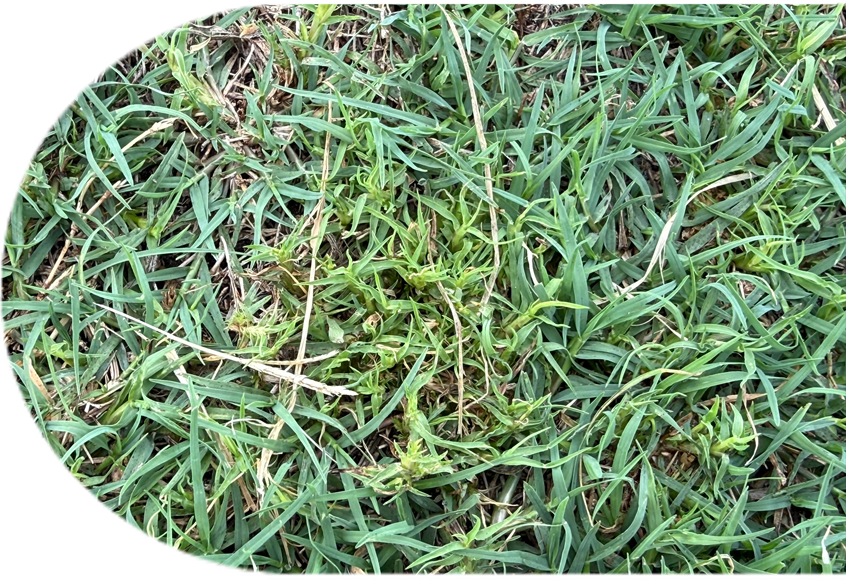
Figure 2. Bermudagrass mite feeding causes yellow, stunted stems and thin turf (Envu). |
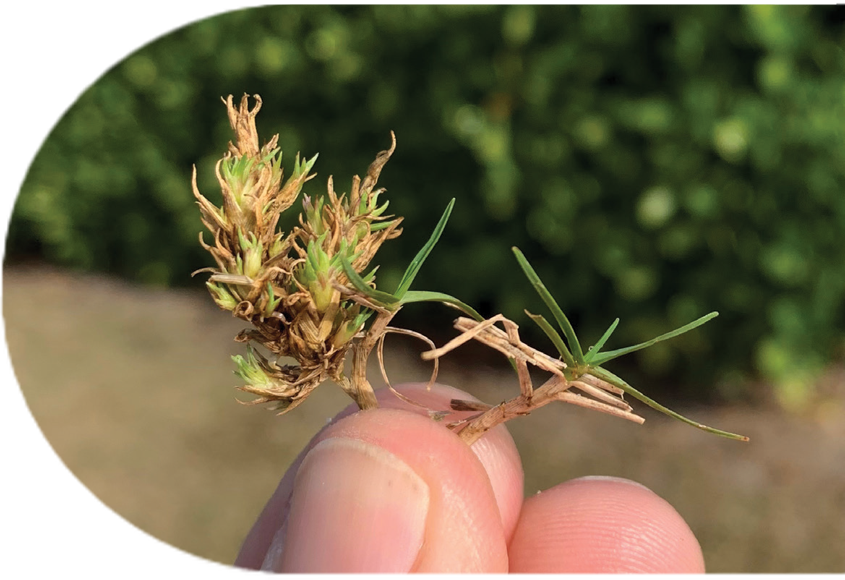
Figure 3. Witches broom of stunted stems (on left) caused by extended bermudagrass mite feeding. Stem on right shows normal leaf growth (Envu). |
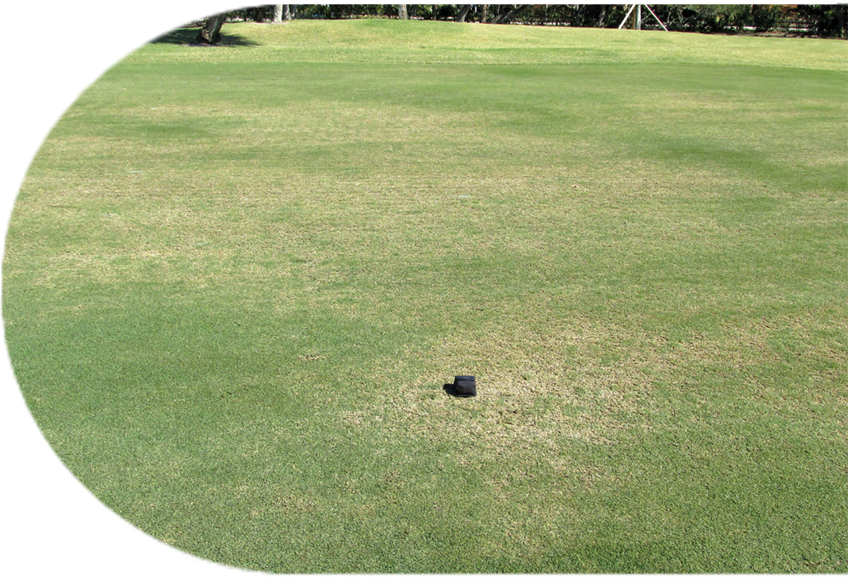
Figure 4. Thin, discolored turf caused by bermudagrass mite feeding in spring (Envu). |