
The Problem
Pythium root rot (PRR) is a major disease of putting greens caused by more than 20 Pythium species that differ in host preference, geographic distribution, and temperature requirements. It is most commonly diagnosed on cool-season turf during hot, wet summer conditions but can also occur in saturated soils during spring, winter, or periods of slow growth. In recent years, PRR has also become increasingly common on bermudagrass putting greens with prolonged soil saturation. Because symptoms can resemble other root diseases, PRR is often misdiagnosed, leading to ineffective management since control requires Pythium-specific fungicides.
What To Look For
During periods of saturated conditions and slow growth from stressful growing conditions (hot or cool temperatures), affected turf can show irregular chlorotic, yellow to orange patches or streaks, or thinned areas of turf. No foliar mycelium is visible, but roots may appear water-soaked and rotted or show a significant reduction in mass or root hair production.
Superintendents suspecting PRR should send samples from the perimeter of both damaged areas and healthy areas to university labs for diagnosis. The complexity of the multiple causal Pythium species compounded by the variable environmental conditions where it can be damaging, make it a difficult disease to diagnose except by the most experienced university turfgrass disease diagnosticians. Additionally, we now know that Pythium spp. can help form a root disease complex, alongside pathogenic nematodes and other soilborne root pathogens.
The Solution
Cultural Control
Pythium belongs to a group of fungal-like organisms known as “water molds,” so saturated conditions are required for infection and damage by PRR. Improving water movement through regular aerification, topdressing, and thatch management is critical for reducing PRR risk. Using moisture meters to apply only the minimum necessary irrigation and improving drainage can further limit PRR severity. Selective removal of trees near greens that impede morning sunlight and air movement will also help improve turf health and reduce disease severity.
Reducing plant stress by raising mowing heights, using smooth rollers, and substituting lightweight rolling for mowing when possible, will also help maintain turf health. If PRR is suspected or confirmed, avoid moisture stress, traffic, and other mechanical stresses to minimize damage.
Preventative Fungicide Control
Preventative fungicide applications for PRR on cool-season putting greens should begin when 2-inch soil temperatures reach 60°F in the spring. Sequential applications every 14 to 21 days throughout the summer are recommended for season-long control. In the Pacific Northwest, applications should continue through the cool, rainy conditions of fall and winter. Although less is known about PRR on bermudagrass putting greens, current recommendations include preventative applications beginning in late summer or whenever prolonged soil saturation is expected.
For optimal control, fungicides targeting PRR should be watered into the root zone immediately after application since the pathogens reside below the soil surface and most fungicides move only upward through the xylem. The primary exception is fosetyl-Al, the active ingredient in Signature™ XTRA Stressgard® Liquid, which can move through the phloem from shoots to roots.
Rotating fungicide modes of action (MOA) is also critical for optimal PRR control. This is due to the large number of Pythium species that can cause infection and each of these species may differ in fungicide sensitivity. Rotating fungicide MOA will also help reduce the development of fungicide resistance in the pathogen population.
Envu® Pythium Root Rot Program
Envu Solutions

Scan to access the latest Envu Agronomic Zone recommendations for your region |
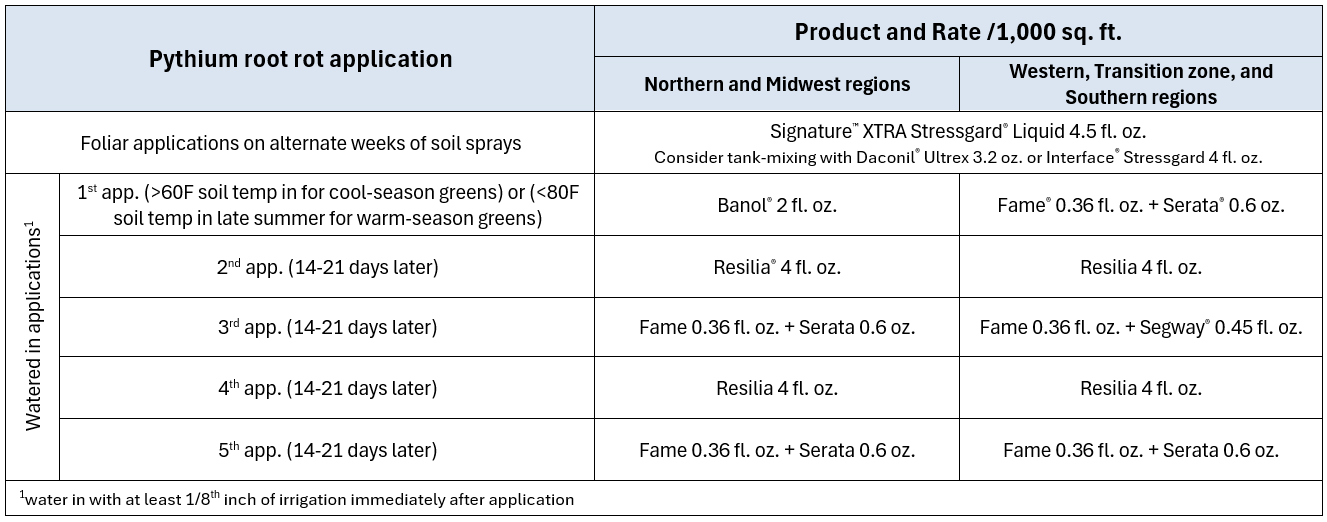
The Envu Pythium root rot (PRR) program incorporates up to five different fungicide MOA to provide broad-spectrum protection against the diverse range of Pythium species that can infect turfgrass. In the Northern and Midwestern U.S., the “Banol® first” approach has delivered consistent, proven performance for decades. In regions with higher disease pressure, beginning the program with a combination of Fame® + Serata® fungicides provides a powerful foundation for industry-leading PRR control while also protecting against other important soilborne root diseases. Incorporating Resilia® root health solution into the program further broadens disease management by providing control of PRR, fairy ring, patch diseases, and pathogenic nematodes.
This program also includes foliar applications of Signature™ XTRA Stressgard® Liquid fungicide on the alternate weeks between soil sprays. Unlike the soil-applied fungicides, this product does not require irrigation after application because its active ingredient, fosetyl-Al, is translocated downward through the plant via the phloem. For broader disease protection, consider tank-mixing with Daconil® Ultrex or Interface® Stressgard fungicide to provide additional control of foliar diseases.
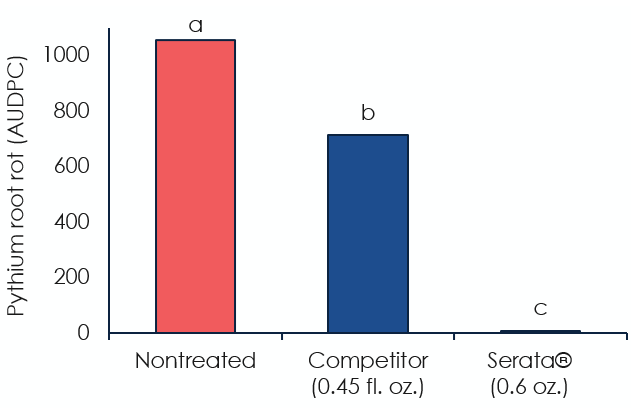
Trial initiated by Dr. Kerns, NC State University, on June 11, 2025. Study conducted on a creeping bentgrass green. All treatments applied every 14 days. |
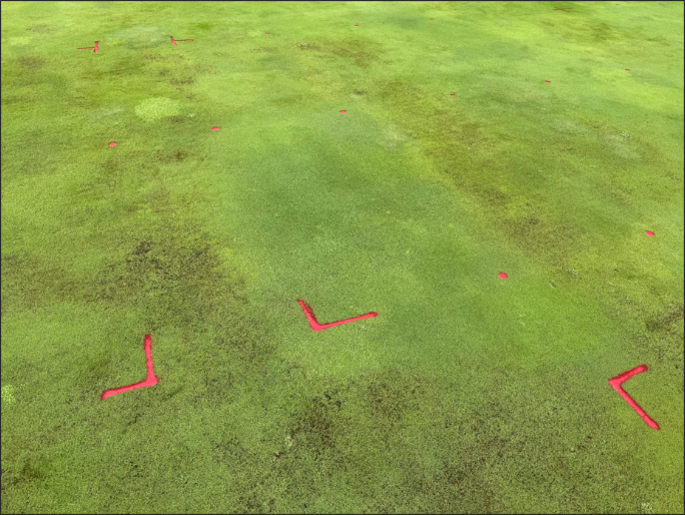
Symptoms of Pythium root rot on a creeping bentgrass green at NC State in 2025. Serata® applied at 0.6 oz./M every two weeks (Envu). |