The Problem
Take-all root rot (TARR) is a root disease of warm-season turfgrass caused by at least five different soilborne pathogens belonging to the genera Gaeumannomyces, Candidacolonium, or Magnaporthiopsis. On bermudagrass, this disease is often referred to as “bermudagrass decline” in older literature.
Take-all root rot is one of the most challenging diseases to control for several reasons. First, the pathogens responsible for TARR are active across a broad range of soil temperatures, approximately 60°F to 85°F, requiring applications earlier than previously thought (typically mid-to-late summer). Second, these pathogens differ somewhat in their sensitivity to fungicides, making fungicidal control less predictable. Further complicating management, the pathogens responsible for TARR can also form a root disease complex alongside various species of Pythium and pathogenic nematodes. These interactions can intensify root damage and amplify the severity of aboveground symptoms.
What To Look For
Symptoms of TARR can appear throughout the growing season but are most common during stressful conditions in late summer and fall, when turf growth slows due to reduced sunlight and cooler temperatures. Symptoms can resemble mini-ring, Pythium root rot, and plant-parasitic nematode damage, so laboratory diagnosis is recommended to confirm the cause and guide appropriate management.
Aboveground symptoms may appear as patches or as diffuse, irregular areas. Older, lower leaves typically turn light green or yellow before symptoms progress throughout the plant. Belowground roots, stolons, and rhizomes discolor from off-white or tan to brown or black, with severely affected roots becoming short and rotted. Dark ectotrophic runner hyphae may also be visible running parallel along infected roots and, in severe cases, on stems and leaf sheaths.
The Solution
Cultural Control
Cultural practices that minimize turfgrass stress can improve overall plant health and reduce the risk and severity of TARR. Raising mowing heights, particularly in the fall, and selectively removing trees can increase light availability and photosynthetic capacity, helping reduce the intensity of infection and symptom expression. Managing thatch and organic matter is also important. Consider incorporating aerification along with light, frequent sand topdressing. Take-all root rot tends to be more severe in soils with a high pH, so avoid unnecessary lime applications and consider using acidifying fertilizers, such as ammonium sulfate when soil pH exceeds 7.
Because TARR pathogens thrive under moist soil conditions, use moisture meters and routinely audit irrigation systems to ensure putting greens are not being overwatered. It may also be beneficial to reduce plant growth regulator applications during periods of elevated TARR risk, as excessive growth regulation may increase turfgrass stress and exacerbate symptom expression.
Preventative Fungicide Control
Managing TARR with preventive fungicide applications is critical because by the time symptoms become visible, significant damage to the root system has often already occurred. Research shows preventive applications should begin when 2-inch soil temperatures decline to 80°F in late summer and continue at 21-day intervals until soil temperatures fall below 55°F, which is much earlier than previously thought.
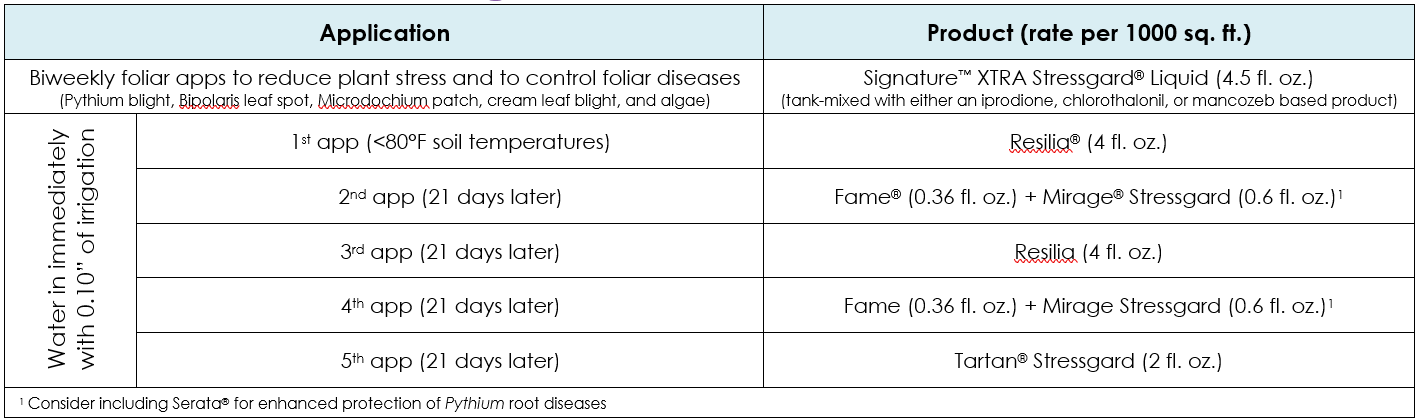
Fungicides should be watered-in immediately with at least 0.10 inch of irrigation to move the active ingredient off the leaf and into the sheath and root zone where the pathogens are active. The most effective fungicide modes of action (MOAs) for managing TARR are DMIs (demethylation inhibitors) and QoIs (quinone outside inhibitors).
Beyond these fungicide classes, it is also important to incorporate products that target Pythium species and pathogenic nematodes. These organisms can occur alongside TARR pathogens as part of a root disease complex, increasing root damage and the severity of symptom expression.
Envu® Take-All Root Rot Program
Program Highlights

Scan to access the latest Envu Agronomic Zone recommendations for your region |
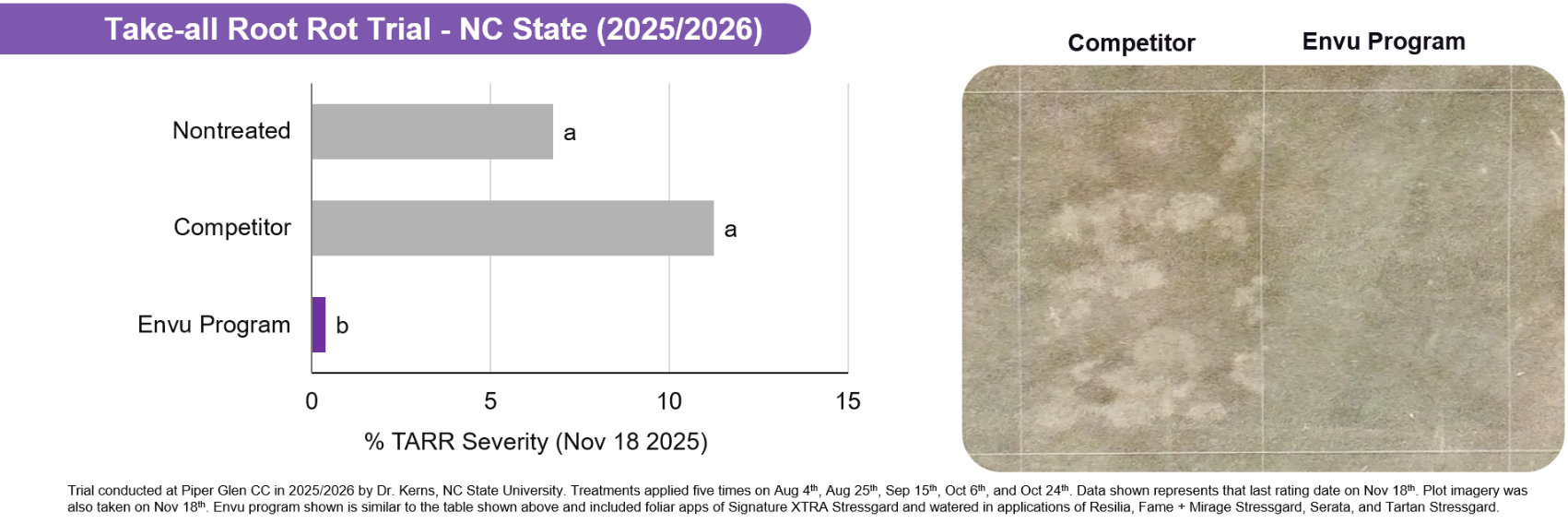
Envu’s TARR program is designed to provide healthy and more resilient turf that takes into consideration the stress-induced nature of symptom expression. This program also considers the biology, genetic diversity, and differences in fungicide sensitivity of TARR pathogens by incorporating multiple MOAs:
- Foliar applications of Signature™ XTRA Stressgard® Liquid (SXSL) can help mitigate TARR symptoms by promoting plant health and improving photosynthetic efficiency. This application, when tank-mixed with an iprodione, chlorothalonil, or mancozeb based product or will also protect the turf from Pythium diseases, leaf spot, cream leaf blight, and algae
- Resilia® includes three MOAs (FRAC 3, 7, & 28) and provides 4-star control against TARR (NC State Turffiles ranking), while also combating Pythium root rot and pathogenic nematodes
- The tank-mix of Fame® + Mirage® Stressgard (reduced 2(ee) rate) provides a powerful combination against TARR. This application will also control spring dead spot and other soilborne diseases. For enhanced control of Pythium root diseases consider including Serata® in this application
- Tartan® Stressgard contains the DMI triadimefon (formerly the active ingredient in Bayleton®) and the QoI trifloxystrobin. This application is perfectly suited to be the final application of the TARR program while the growth of bermudagrass begins to slow