
Signature™ XTRA Stressgard® Liquid Fungicide: An Origin Story of the Hero of Plant Health
Signature™ brand fungicides have long been recognized as cornerstones of turfgrass disease management and plant health innovation. From the origin of their fungicide active ingredient (fosetyl-Al) and the launch of Aliette® to its evolution into Chipco® Signature and the integration of Stressgard® Formulation Technology, this product line has consistently set new standards for performance under stress. The following narrative traces this journey, highlighting scientific breakthroughs, formulation advances, and real-world validation that have shaped Signature’s legacy, culminating in its latest chapter: launch of Signature™ XTRA Stressgard® Liquid fungicide, a modern solution backed by decades of proven performance, now in an easy-to-use liquid formulation. For the “Too Long Didn’t Read” (TL;DR) version of the story, see Table 1.
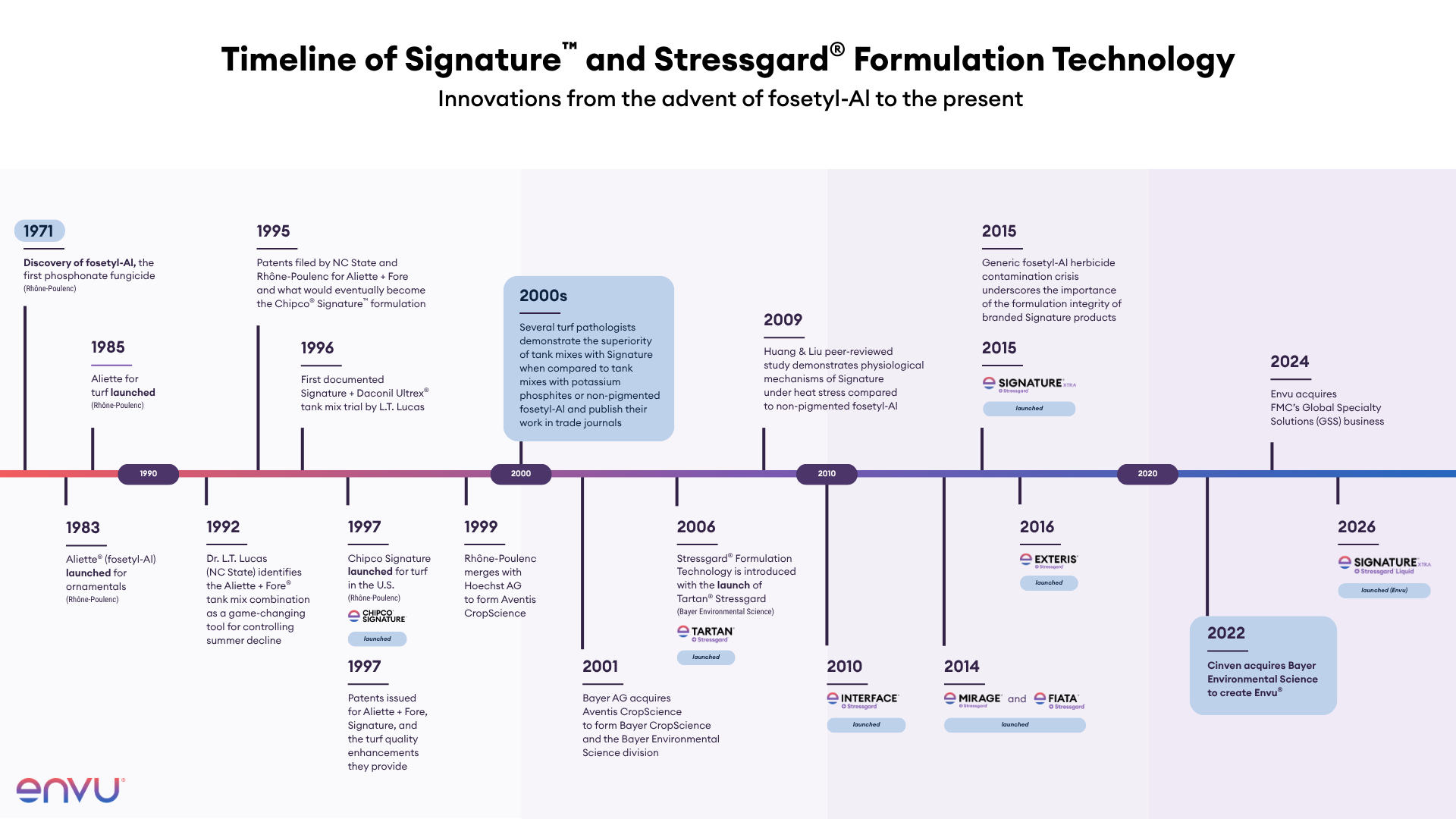
Chapter 1: The Beginning (1971–1985)
Our story starts with Aliette, a non-pigmented fosetyl-Al fungicide that was developed by Rhone-Poulenc and launched for ornamentals in 1983 and for turf in 1985. Aliete’s launch marked the introduction of a novel mode of action for control of Pythium and other oomycete diseases. This new group, the phosphonates (FRAC P07), provided unprecedented mobility within the plant — true systemicity —both xylem and phloem movement (upward and downward). Golf course superintendents could apply Aliette as a foliar spray and achieve suppression of Pythium root rot and summer decline, both of which were relatively new “villains” during the 1980s. Additionally, because fosetyl‑Al acted not only through direct pathogen inhibition but also through the stimulation of plant defenses, its launch also introduced a hybrid mode of action and was an early example of what we came to understand as “systemic acquired resistance.”
Chapter 2: The Breakthrough (1990s)
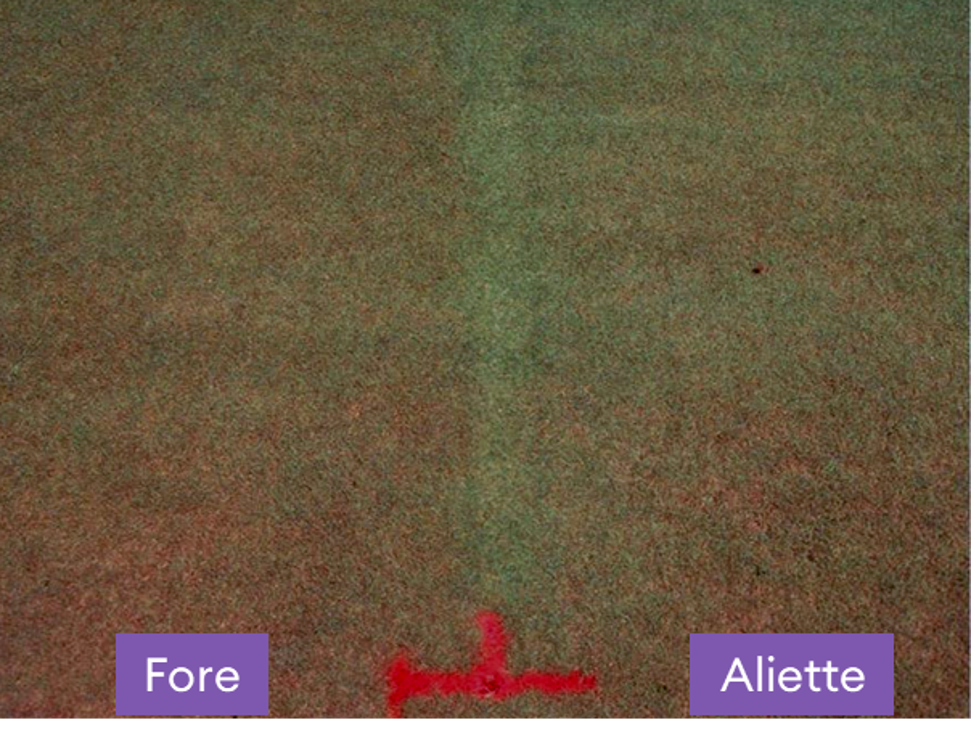
In 1992, Dr. L.T. Lucas at North Carolina State University (NC State) began searching for enhanced solutions to summer decline and Pythium root rot, since their incidence and severity were increasing as superintendents adopted more stressful management practices to meet golfers’ demands for faster greens. Within the first two years of Lucas’ fungicide trials against these targets, his results quickly revealed that a tank-mix of Aliette and Fore® (mancozeb) significantly improved turf quality and disease control compared to all other fungicide tank-mix iterations (Lucas and Mitchum, 1994). And the rich lore behind this magical tank-mix is that Lucas first stumbled across it on accident when an overlap area between adjacent Fore and Aliette plots provided greener, healthier turf that lasted well beyond the normal spray interval and pigment duration (Figure 1 below). This discovery was groundbreaking because it showed that 1) bentgrass could survive in the South under intense abiotic and biotic stress and 2) the potential for fungicides to provide plant health benefits beyond disease control. In fact, because of his follow-up work described below, Lucas is often referred to as the “godfather of plant health” in turfgrass science (Richman, 2013).
Laurence Mudge was the Field Development Scientist at Rhone-Poulenc who was coordinating the collaborative Aliette trials with Dr. Lucas during this period. During a recent interview, Mudge shared his recollection of these events:
"L.T. called me and said, 'Laurence, you need to come look at this trial. You're not going to believe it.' I drove out a day or two later and sure enough, the Aliette + Fore combination looked outstanding…I'd never seen anything like it in a fungicide trial. You're sitting there looking at this thing going, 'Holy smokes, this is meaningful.’”
Extensive follow-up research conducted by Lucas, Mudge and formulation scientists at Rhone-Poulenc identified the compound in Fore that was responsible for enhancing turf quality. Within a short period of time, Rhone-Poulenc took on a massive formulation chemistry effort to develop a product that combined the most effective version and loading of this compound with fosetyl-Al, resulting in the launch of Chipco Signature in 1997 and three unique patent filings issued between NC State and Rhone-Poulenc and their respective researchers (Lucas and Mudge, 1997; Lucas, 1997; Mudge, 1997)
Initially, Chipco Signature combined with Fore was the new go-to solution for managing summer decline because this combination provided even greater disease control and turf quality under stress compared to the Aliette and Fore mixture. However, this combination, particularly the Fore (mancozeb) component, had major shortcomings: superintendents often needed additional sprays to cover diseases like dollar spot and anthracnose, and Fore’s pigment sometimes created an artificial green color.
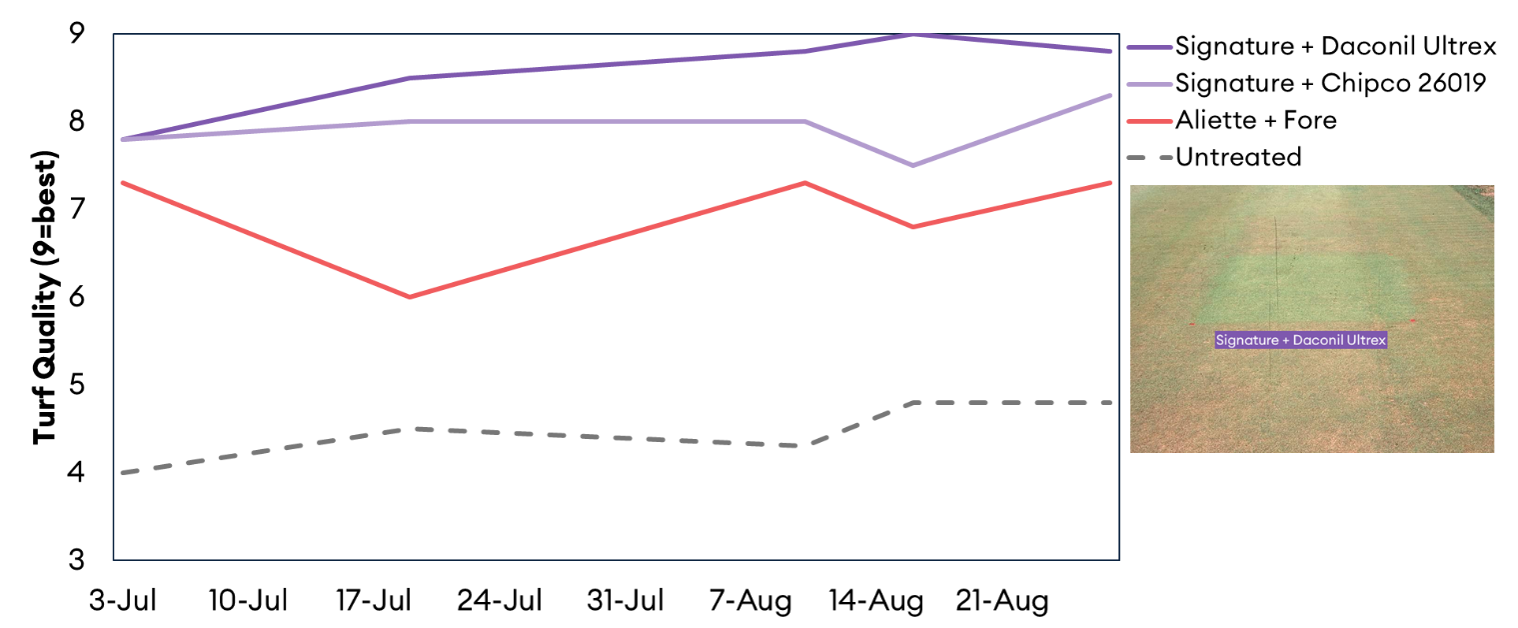
Another significant benefit from Signature’s patented formulation was its ability to be tank-mixed with a broader range of partners beyond Fore, offering flexibility without sacrificing turf health benefits. Fungicides like Daconil Ultrex® and Chipco 26019 emerged as ideal partners for Signature, delivering comprehensive control of pythium, brown patch, dollar spot and anthracnose — all while maintaining natural turf color and enhanced turf quality and vigor.
As Lucas noted in 1996:
“We did extensive testing with Signature this summer. Signature, when combined with Daconil or 26019 for example, worked better on average than regular Aliette. We also observed that with Signature, there was not a turf color change from the pigment. Instead, we saw the healthy color from improved turf quality several weeks after application.” (Figure 2).
Mudge shared during his recent interview:
"The whole thing with L.T. and me was that we were seeing turf quality improvement above and beyond disease control…Diseases are just one of the stresses. They're not all of them. It all comes back to stress."
These observations by Lucas and Mudge were the first clues that this novel formulation technology was inducing physiological mechanisms to improve turfgrass health, not simply contributing to disease control. Golf course superintendents who adopted Chipco Signature shortly after its launch echoed these benefits, praising the flexibility and performance of these new mixes (Rhone-Poulenc, 2000):
“I tried the Aliette after a University recommended it to me. We treated greens that were the worst on our course...and now they are some of the best greens on our course. This past year we tried Signature plus Daconil and Signature plus 26019. We got good quality grass, good color, and our root systems seem to be even stronger this year.” – Jeff Offutt, Kenny Perry’s Country Creek GC, Franklin, KY
“From a visual standpoint, we found that the Signature plus Chipco 26019 or Daconil Ultrex gave us a better color. The Aliette plus Fore sometimes made the grass an artificial-looking green color. The Signature was a more true green — a better quality, more natural color.” – Steve Gipson, Fairlawn Country Club, Akron, OH
“We’ve used the Aliette plus Fore combination in the past, and although I liked the disease control we got, our manganese levels in the greens had gotten too high. We switched to Signature plus Daconil, and our pythium control is just as good and our brown patch control is even better.” – Ron Richie, Gaston Country Club, Gastonia, North Carolina
“Now I can actually go to bed at night not worried about my greens. If you know anything about being a superintendent, you’d know that’s unusual” – Phil Williams, College of Wooster GC, Wooster, OH
Chapter 4: The Validation (2000s)
Building on Lucas’ emphasis on tank-mixing partners beyond Fore, several leading turfgrass pathologists evaluated combinations such as Signature Daconil Ultrex, and Signature Chipco 26019/26GT during the early 2000s. Their research demonstrated equally impressive control of summer diseases and reinforced Lucas’ conclusion that Signature should serve as a cornerstone for summer stress management on putting greens. Below is feedback from noted pathologists published in trade journal articles from that era:
-
Dr. Bruce Clarke (Rutgers) warned that aggressive mowing heights and reduced soil moisture were increasing stress and disease pressure. His research showed that Signature combined with Daconil or Chipco 26GT provided seasonal disease protection and improved turf quality. (Hanrahan, 2004; Figure 3)
- "I've used Chipco Signature in trials for a number of years, and each time I see enhanced density and turf quality," Clarke said. "I believe what we're seeing is a combination of both fungicidal activity and an overall improvement in plant health. Anthracnose is a plant health disease, so applying Signature in combination with your anthracnose treatment will certainly increase your control." – Dr. Bruce Clarke (Spak, 2002)
- Dr. Karl Danneberger (Ohio State University) focused on shaded greens where air movement was limited, noting that Signature tank-mixes improved turf color and coverage, helping stressed turf maintain vigor. (Hanrahan, 2004)
- "Our best results were with a Signature/26GT combination, using 4 ounces of each product per 1,000 square feet," Danneberger explained. "We sprayed on a 14-day schedule beginning in mid-May and ending in early September. Our initial test was in 1998, but results have been replicated in subsequent years. I think Signature just makes the plant healthier and able to withstand disease pressures."
- Dr. Joe Vargas (Michigan State University) highlighted physiological benefits, explaining that Signature thickens cell walls, slows respiration, and boosts carbohydrate reserves, enabling turf to withstand heat and traffic. Vargas stressed starting Signature programs early in cool weather to build strength before stress season. (Hanrahan, 2004)
- "If you can slow down respiration, you'll get a healthier plant," Vargas said. “While Signature builds the health of the plant, the other products, 26GT and Daconil, take care of seasonal disease problems like dollar spot and brown patch."
Dr. Bruce Martin got his Ph.D. with Dr. Lucas at NC State, and Dr. Martin also built upon Lucas’ work with Signature programs when he got his faculty position at Clemson University, conducting research on cool- and warm-season putting green turf. Martin showed that Signature-based programs can also reduce the severity of bermudagrass decline and improve bermudagrass quality during spring transition following overseed.
Simultaneously during the early-2000s, potassium phosphite products became widely marketed in turfgrass. Multiple university studies validated Signature’s unique benefits compared to these other phosphonates (Vincelli and Dixon, 2005; Cook et al., 2006; Murphy et al., 2008). Signature tank-mix programs consistently ranked in the top statistical group for dollar spot control and turf quality, outperforming phosphite fungicides under stress conditions. However, the authors of these studies wrote in their articles that while they expect the pigmented formulation to play a significant role, they were unsure of the mechanisms for why Chipco Signature provided enhancements of disease control and turf quality compared to other phosphonates: was it enhanced disease control or a physiological mechanism?
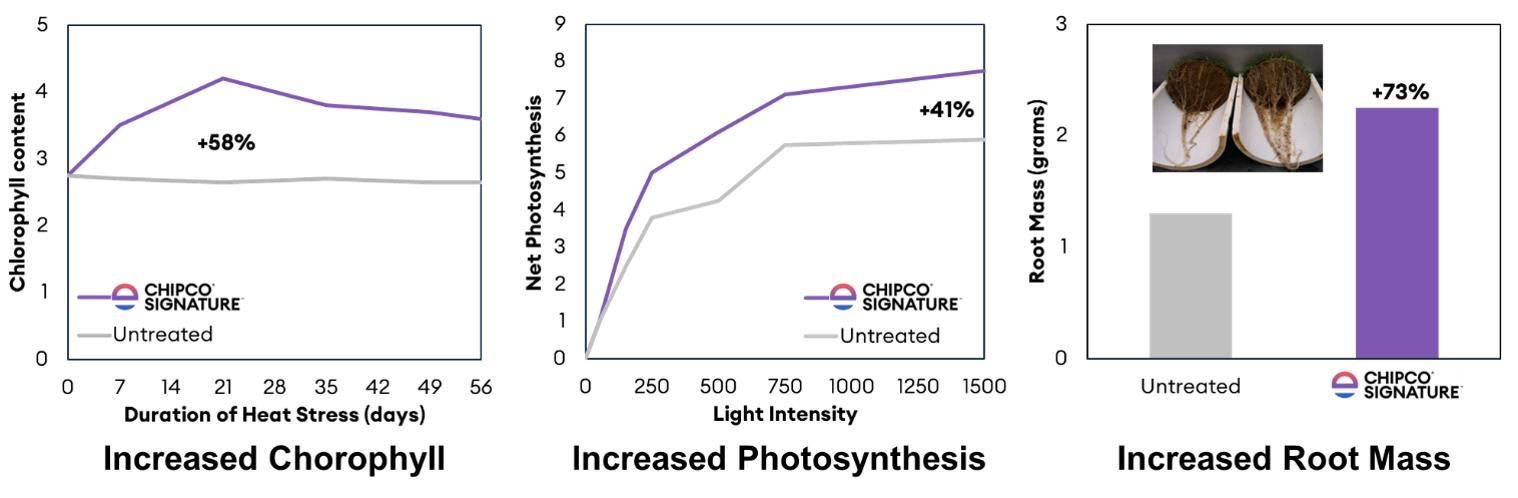
Meanwhile, behind the scenes, Dr. Bingru Huang was conducting some of the first in-depth physiological studies with Signature, finding that that Signature-treated bentgrass under heat stress had up to 58% greater chlorophyll content, 30% greater photosynthetic efficiency and 73% greater root mass — even in the absence of disease — compared to untreated turf in 2003 (Figure 4) and also compared to non-pigmented fosetyl-Al, ultimately publishing this seminal Signature work in a peer-reviewed journal (Huang and Liu, 2009).
Chapter 5: The Evolution (2006–2016)
The mid-2000s also brought the integration of this unique, pigmented formulation technology into other active ingredients with the launch of Stressgard® Formulation Technology. In 2006, Bayer Environmental Science launched Tartan® Stressgard followed by eight more Stressgard products over the next 10 years:
- Reserve® Stressgard (triticonazole + chlorothalonil) – 2009
- Triton® Flo Stressgard (triticonazole) – 2009
- Interface® Stressgard (iprodione + trifloxystrobin) – 2010
- Mirage® Stressgard (tebuconazole) – 2014
- Fiata® Stressgard (potassium phosphite) – 2014
- Signature XTRA Stressgard (fosetyl-Al) – 2015
- Exteris® Stressgard (fluopyram + trifloxystrobin) – 2016
In 2015, Signature XTRA Stressgard raised the bar. With a new and improved Stressgard formulation, it delivered antioxidant protection, optimized fosetyl-Al loading, broader label claims (diseases and plant health), improved application flexibility and new more convenient packaging.
“When we got some higher temperatures (high 80’s only) with higher humidity levels, suddenly the check plot started to look stressed while [Signature XTRA Stressgard treated turf] looked very good!” - David Kazmierczak, CGCS, Prestwick GC, Woodbury, MN
Ironically during that same year, the 2015 recall of generic fosetyl-Al fungicides due to herbicide contamination was a wake-up call for the turf industry (GCI, 2015; Moeller, 2015). Widespread application of these generic fosetyl-Al products caused severe turf injury on Poa annua and creeping bentgrass greens, collars and surrounds. Unfortunately, several golf courses had severe if not complete loss of turf on their finest playing surfaces, leading to millions of dollars of renovations and lawsuits. This incident underscores why the best superintendents prioritize trusted formulations with documented research and EPA-approved plant health claims over low-cost generics. When turf quality and course reputation are on the line, cutting corners is never worth the risk.
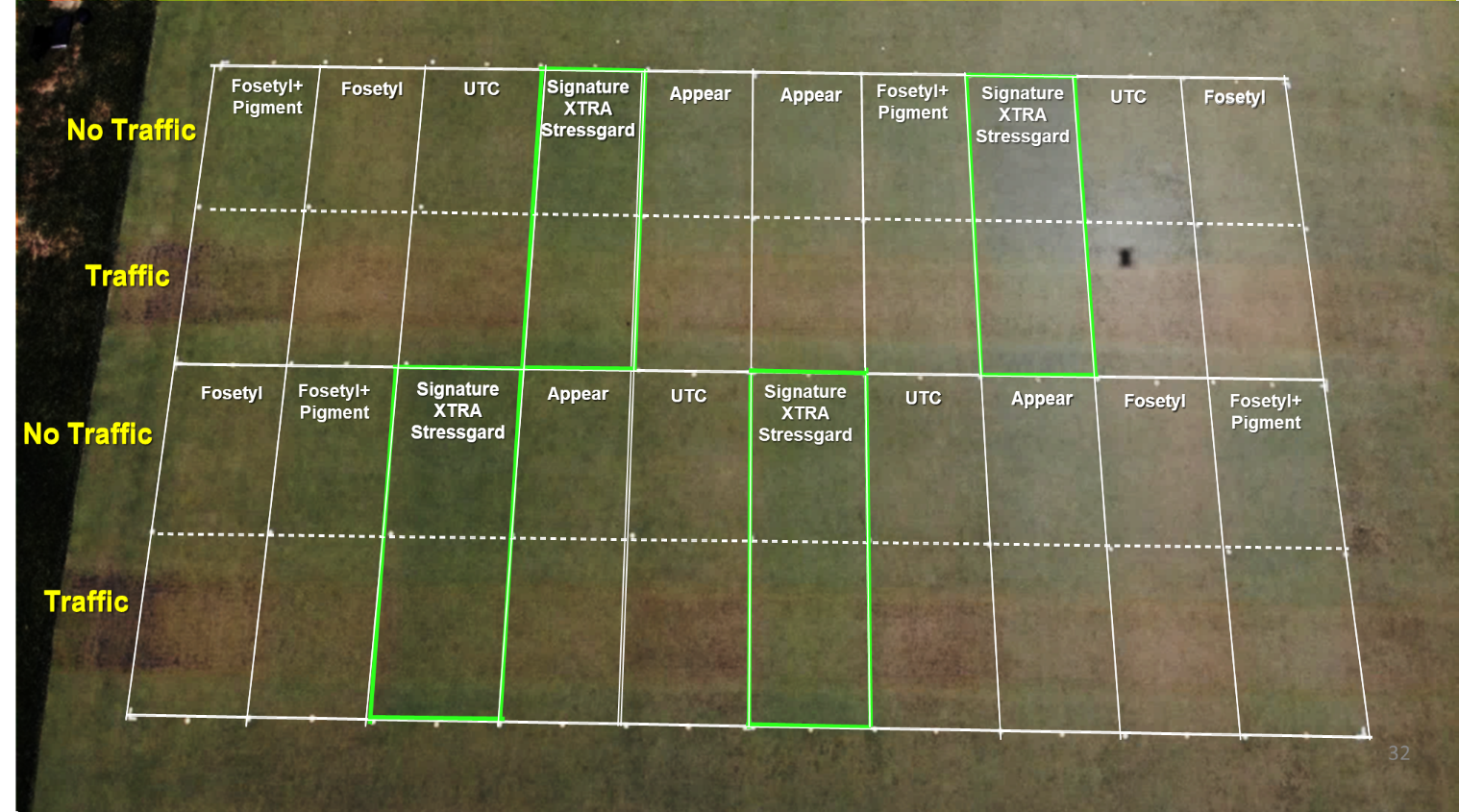
Adding to the mounting evidence, the plant health benefits of Signature XTRA Stressgard were recently highlighted in a peer-reviewed publication by Dr. Jim Murphy and his team at Rutgers, in which they showed that Signature XTRA Stressgard-treated bentgrass putting green turf exhibited greater green cover and turf density under wear stress compared to other pigmented phosphonate products (Park et al., 2026; Figure 5).
Chapter 6: The Future (2026)
After years of work, the hero evolves again in 2026. Signature XTRA Stressgard Liquid fungicide is a first-of-its kind liquid fosetyl-Al formulation that delivers the same trusted cornerstone of plant health and disease control that superintendents have trusted for decades.
This novel, easy-to-use formulation was developed with the golf course superintendent in mind, providing excellent tank-mix compatibility and convenient handling from start to finish. It’s dust-free, easy to disperse into solution, and smooth when flowing through nozzles and screens. Signature XTRA Stressgard Liquid fungicide has an optimized green color to demonstrate the turf’s natural health, and it’s even conveniently packaged in 4 x 98-fl oz. cases, where one 98 fl. oz. bottle treats exactly 0.5 acres at the 4.5 fl. oz. per 1,000 ft2 rate or 1 acre at the 2.25 fl. oz. per 1,000 ft2 rate.
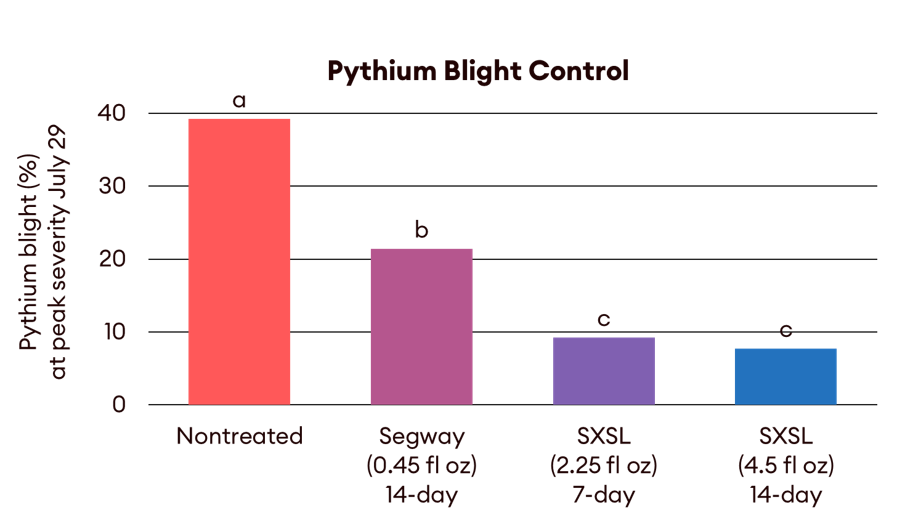
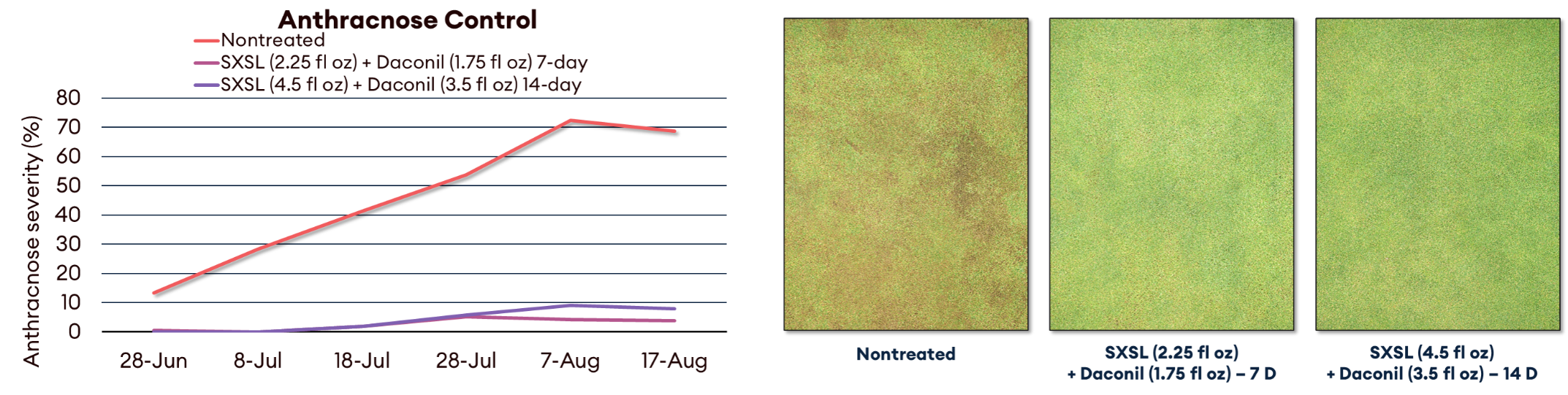
Signature XTRA Stressgard Liquid fungicide provides defense against Pythium blight and Pythium root diseases without the need for post-application irrigation, and it’s still the essential tank-mix partner for anthracnose, summer decline, bermudagrass decline and leaf spots (Figures 6 and 7). But what’s new with this formulation is expanded disease claims on its label, including Microdochium patch and algae (Figure 8).
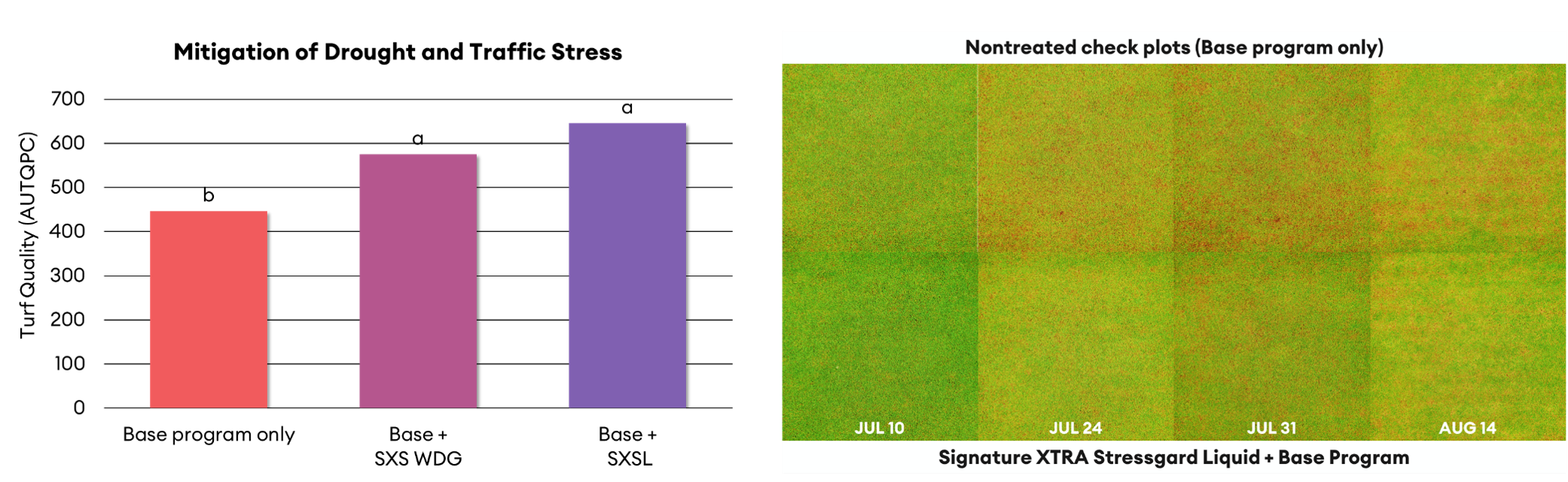
And during the several years of development and thousands of data points, we’ve also validated the plant health effects of Signature XTRA Stressgard Liquid Fungicide in conditions of heat, drought, traffic, low-mowing and shade stress (Figure 9). To leave no stone unturned, Envu worked with Dr. Bingru Huang once again to conduct rigorous physiological studies to elucidate the mechanisms of enhanced photosynthetic efficiency to provide the trusted plant health benefits beyond disease control with this new liquid formulation.
Signature XTRA Stressgard Liquid fungicide will be available for purchase during the 2026 early order season, and here’s what golf course superintendents who had the opportunity to test it at their property had to say about the new formulation:
“Over the last year here at Oakmont, we have been fortunate to be able to utilize the new Signature XTRA Stressgard Liquid fungicide. We have liked the results we have seen from this new product. From a fungicide standpoint — same results. From a plant health benefit standpoint — same results. From a color and pigment perspective, we have seen very similar results as well."
"Clubs that start working the liquid formulation into their program are just going to find it way easier: easier mixing, better tank-mix compatibility, and great results."
"From all indications, I expect that we will make a complete switch to the liquid formulation as we move into next season."
- Michael McCormick, Grounds Superintendent at Oakmont Country Club, Oakmont, PA
"Envu approached us a while back. They knew we had historically used Signature XTRA, and when the new formulation was coming out, they allowed us to do some testing with it. And we saw right off the bat, we saw this was good stuff. It’s easy. The color is good. The mixing is good."
"If I had to describe Signature XTRA Stressgard Liquid in one word, what would it be?
"That’s tough, there are a lot of words I could use. ‘Convenient’ is one, because the mixability really does make it convenient. ‘Efficient,’ because it speeds the process. It’s still as effective as it has always been. Honestly, the simplest way I’d describe it: it’s the foundation of our program."
- Lee McLemore, CGCS, Director of Golf Course Operations, Country Club of Birmingham, Birmingham, AL
Acknowledgements:
Sincere appreciation is extended to Laurence Mudge for his foundational contributions to the development of Chipco® Signature™ and Stressgard® Formulation Technology, and for generously sharing his recollections and insights to help verify and preserve the history presented in this article.
References:
Anonymous. 2015. Fungicides pulled from market. Golf Course Manage. 83(7):p. 26.
Cook, J., P. Landschoot, and M. Schlossberg. 2006. Phosphonate products for disease control and putting green quality. Golf Course Manage. 74(4):p. 93-96.
Hanrahan, R. 2004. Standing up to summer stress. TurfGrass Trends. 60(1):p. 61-62.
Huang, B., and X. Liu. 2009. Physiological responses of creeping bentgrass to heat stress affected by phosphonate fungicide application. Int. Turfgrass Soc. Res. J. 11(Part 2):p. 799-806.
Lucas, L. T., and B. D. Mitchum. 1994. Evaluation of fungicides for control of summer decline of creeping bentgrass, 1993. Fungicide Nematicide Tests. 49:p. 331.
Lucas, L., and L. Mudge. Fungicidal compositions for the enhancement of turf quality. US 5,643,852A, United States Patent and Trademark Office, 1 July 1997.
Lucas, L. Fungicidal compositions for the treatment of crown and root rot in turfgrass. US 5,665,672A, United States Patent and Trademark Office, 9 September 1997.
Moeller, A. 2015. Wet conditions, fungicides recalled, and bermudagrass growth trends. USGA (Online)
Mudge, L. Fungicidal compositions for the enhancement of turf quality. US 5,599,804A, United States Patent and Trademark Office, 4 February 1997.
Murphy, J., F. Wong, L. Tredway, J. Crouch, J. Inguagiato, B. Clarke, et al. 2008. Best management practices for combating anthracnose. Golf Course Manage. 24:p. 93-104.
Park, B. S., Samaranayake, H., Burgess, P. W., & Murphy, J. A. 2026. Wear stress of creeping bentgrass as affected by pigmented phosphonate fungicides. Crop, Forage & Turfgrass Manage. 12. e70114. https://doi.org/10.1002/cft2.70114
Richman, H. 2013. The godfather? Golf Course Manage. 81(7):p. 48.
Rhone-Poulenc. 2000. Turning Up the Heat on Summer Turf Diseases. Rhone-Poulenc technical presentation.
Spak, D. 2002. Combination of fungicides stems tide in mid-Atlantic. TurfGrass Trends. 11(10):p. T1, T6-T7.
Vincelli, P., and E. Dixon. 2005. Performance of selected phosphite fungicides on greens: Phosphite fungicides provide good results, but one stands above the rest. Golf Course Manage. 73(7):p. 77-81.